Workplace Health, Physiotherapy, Services
Workplace Injury Triage: Getting the Right Care at the Right Time
Workplace injury triage helps ensure injured workers receive the right care at the right time.

Blog
WORKPLACE INJURY MANAGEMENT
Sprains and strains at work are among the most common workplace injuries. Early assessment, appropriate treatment and modified duties can help workers recover safely and reduce the risk of reinjury.
Author:
Aaron Connolly, Physiotherapist & Manager
Published October 30, 2026
Share this Article:
Sprains and strains at work are the bread and butter of workplace injury — the rolled ankle on uneven ground, the strained back from an awkward lift, the wrenched shoulder from a jammed pallet. Individually they seem minor. Collectively, body stressing injuries are the leading cause of serious workers compensation claims in Australia, and how each one is managed in its first days largely decides whether it resolves in a fortnight or lingers for a year.
This guide is for supervisors, first aiders, safety teams and workers themselves: what sprains and strains actually are, what to do immediately, what good recovery management looks like, and how workplaces can prevent the next one.
The terms get used interchangeably, but they describe different tissues:

A sprain is an injury to a ligament — the tissue connecting bone to bone at a joint. Classic example: a rolled ankle stretching or tearing the outside ankle ligaments.
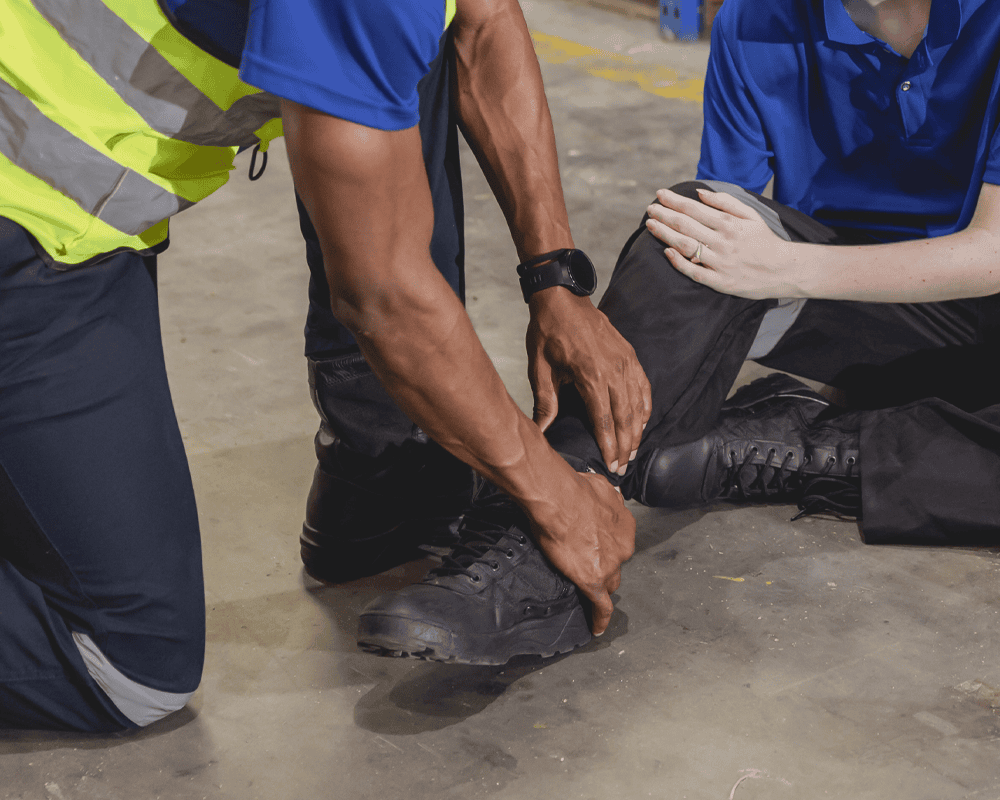
A sprain is an injury to a ligament — the tissue connecting bone to bone at a joint. Classic example: a rolled ankle stretching or tearing the outside ankle ligaments.
Both range from mild overstretch (grade 1) through partial tears (grade 2) to complete ruptures (grade 3). Mild and moderate injuries are managed conservatively and recover well; severe grades need medical assessment and occasionally surgery. Safe Work Australia’s statistics consistently rank body stressing — the mechanism behind most strains — as the top cause of serious claims nationally (Safe Work Australia).
Modern soft tissue guidelines have moved on from old-school RICE (rest, ice, compression, elevation) toward protocols that protect early, then load early. A practical summary for the workplace:
Soft tissue heals in response to load. The recovery arc for a typical workplace sprain or strain runs:
Timeframes vary with grade and tissue — ankle sprains and back strains often feel dramatically better within two weeks; hamstring and tendon injuries demand more patience.
What matters is progression: every week should be measurably stronger than the last, and stalls should trigger clinical review, not resignation.
or sprains and strains specifically, workplace-connected care has structural advantages:
Different tissues, different personalities. A quick field guide to the most common workplace presentations:

Dramatic early pain that usually improves quickly with movement and reassurance. The biggest risk isn’t the tissue; it’s the fear. Early activity, early confidence and early duties are the treatment. Prolonged bed rest is actively harmful.

Respond well to early protected loading and balance retraining. The neglected part is the last 20%: workers cleared when pain settles but before balance and strength return roll the same ankle again within months. Finish the rehab.

Slower movers, especially where overhead work is involved. Respect the tissue’s timeline, progress loading patiently, and modify overhead tasks longer than feels necessary.

Notorious re-injury candidates when rushed. Strength testing before full clearance matters more here than anywhere.

Often gradual-onset and task-linked. Treat the tissue and the task: repetition rates, tool grip and workstation setup, or it returns.
Employers who run this playbook consistently find that sprains and strains stop being claims and become maintenance events — noticed, managed, resolved, learned from.
Sprains and strains cluster around predictable causes — and each has a control:
Most sprains and strains improve steadily from week one. When one doesn’t, work through this checklist rather than simply extending treatment:
The discipline of reviewing stalled cases at four weeks — formally, with fresh eyes — prevents the quiet drift from acute injury to chronic problem that costs workers their function and employers their premium.
Employ Health gives workplaces same-day assessment, early intervention physiotherapy and job-matched rehabilitation for sprains and strains — so small injuries stay small. Talk to our team about protecting your workforce.
A sprain injures a ligament (joint connective tissue); a strain injures a muscle or tendon. Both range from mild overstretch to complete tears and are managed similarly in early stages.
Usually not for mild and moderate injuries. Modified duties within pain-guided limits support recovery better than rest at home — provided duties are properly matched to capacity.
With red flags: suspected fracture or rupture, inability to bear weight, deformity, numbness, or symptoms not improving as expected. Most cases are managed well by physiotherapy without imaging.
Mild injuries commonly settle over one to three weeks; moderate injuries over three to eight; severe injuries longer. Progressive loading — not complete rest — drives the timeline.
Risk-assess and redesign hazardous manual tasks, run warm-up and conditioning programs, manage fatigue, keep environments hazard-free, and enable early reporting so niggles are treated before they tear.
Workplace injury triage helps ensure injured workers receive the right care at the right time.
Suitable duties programs help injured workers stay productive while recovering. With meaningful tasks, clear restrictions
Discover practical strategies to prevent workplace injuries, encourage early reporting and help employees recover at
Early injury reporting helps employers address workplace discomfort before it becomes a more serious injury.
Tell us a little about your workplace and one of our specialists will be in touch to discuss the best options for your team.
"*" indicates required fields