
Immediate injury triage, risk assessment, and coordinated care pathways designed to reduce downtime, unnecessary medical escalation, and claim duration.
Rapid Response™ is designed for organisations where injuries don’t happen conveniently during business hours. Our team can rapidly assess incidents; in one hour or less, provide early intervention, and activate the appropriate support pathway when and where it’s needed most.
Rapid Response™ enables immediate triage and early risk stratification to activate the right response pathway from the beginning.

Prevent unnecessary medical escalation
Identify injury risk early
Reduce TRIFR, MTIs, and LTIs
Reduce claim duration and severity
Activate the right care pathway faster
Support faster return to work

1 Hour
or Less Response Goal

24/7
Response Coverage

6,500+
Network of Practitioners

2,500
Locations Across ANZ
The Employ Health gold standard support pathway
The Right Response, Every Time
Data alone doesn’t improve outcomes. Rapid intervention does. The faster the response, the greater the opportunity to reduce claim duration, unnecessary escalation, and workforce disruption.
The Classic Response
Rapid Response™ by Employ Health
How Rapid Response™ by Employ Health works
Rapid Response™ follows a proven early intervention pathway to asses, triage and activate the right support for every injury.

Contact & Report
Injuries or symptoms are reported by the worker, supervisor or site team, 24/7.


Immediate Triage
A qualified professional conducts an immediate assessment onsite or via Rapid Response™
Risk Assessment
We risk stratify the injury to identify needs, including work modification and early psychological risk screening.
Right Pathway Activated
We activate the correct pathway and coordinate care to support recovery and return to work.

The Employ Health Difference
Combining ANZ-wide capability with internationally aligned quality systems and integrated injury management solutions.
With operational capability across Australia and New Zealand, Employ Health combines national workforce coverage with internationally aligned quality systems to deliver consistent, scalable, and trusted injury management support. Backed by ISO-certified processes and one of ANZ’s largest provider networks, Rapid Response™ helps organisations maintain visibility, coordination, and continuity of care across every location.
We help organisations through:
6,500+ practitioners across Australia and New Zealand
2,500+ provider locations across ANZ
Full-time teams operating across both countries
ISO 45001 & ISO 9001 aligned quality and safety systems
End-to-end injury management with connected care pathways
Designed to create flexibility after triage
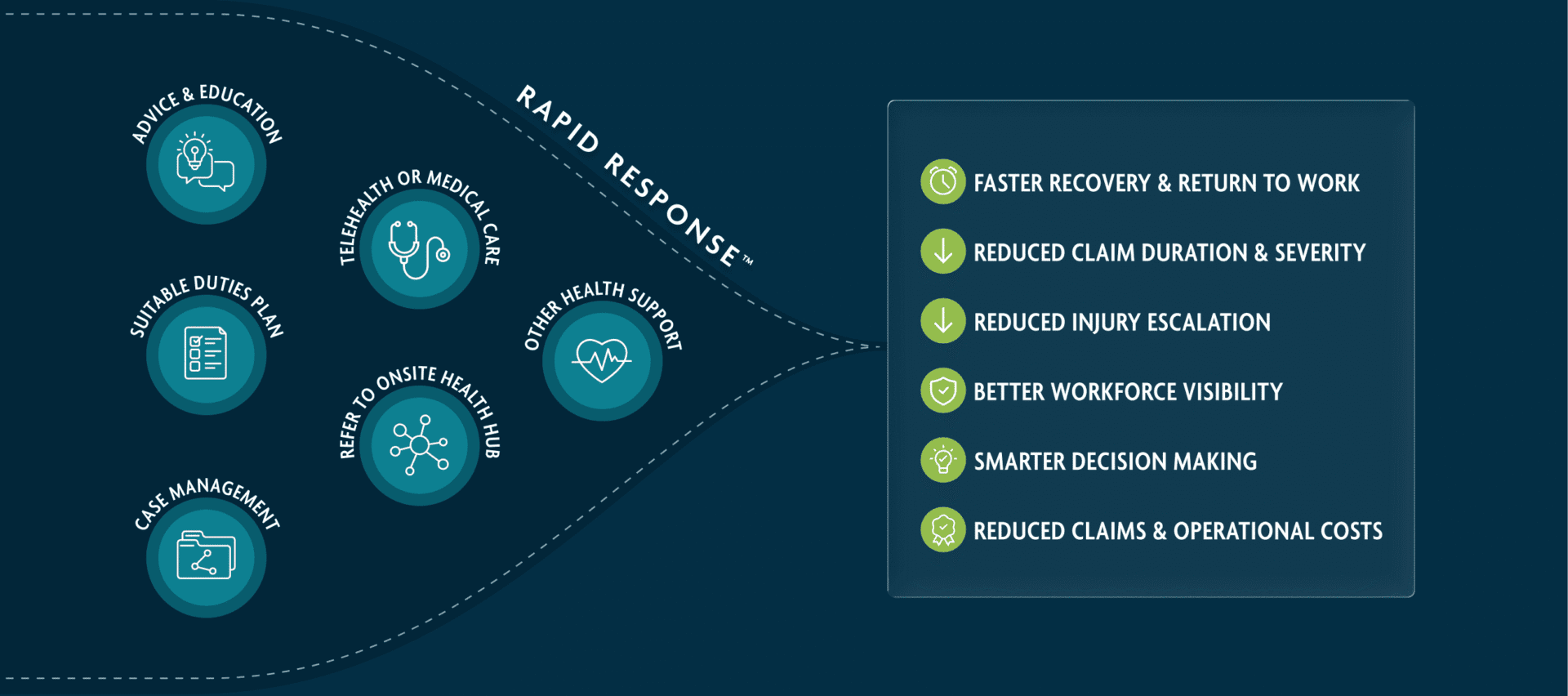
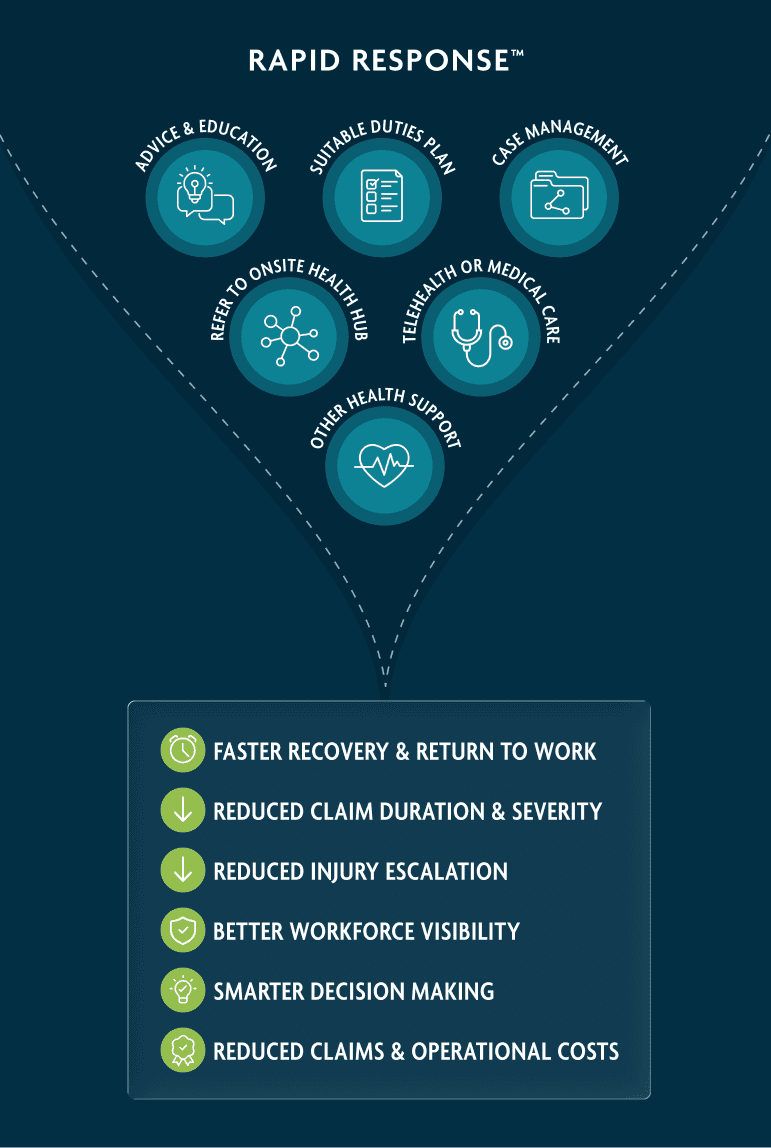
Coordinated Care Pathways
Once an injury is assessed, workers can be directed into the most appropriate level of support based on severity, risk profile, workplace requirements, and recovery needs.
Technology & Visibility
One of the key differences behind Rapid Response™ is the technology ecosystem supporting every interaction, giving organisations greater oversight, coordination, and operational clarity.

Full Visibility
Complete end-to-end visibility across all incidents and actions.

Automated Reports
Real-time, automated reports to save time and improve accuracy.

Customised Reports
Tailored reporting pathways to meet your organisation’s needs.

Dashboard Access
Live dashboards for instant insights and monitoring.

Progress Tracking
Track progress, milestones and outcomes at every step.
Contact us
Build a faster and more connected injury response system.
Rapid Response™ helps organisations respond earlier, reduce unnecessary escalation, and improve workforce outcomes.
- Reduce claim duration and injury escalation
- Improve workforce visibility and reporting
- Support remote, regional, and shift-based teams
- Deliver faster and more coordinated injury management
Frequently Asked Questions
Does Rapid Access Improve Outcomes?
Yes. Large cohort studies consistently show a graded relationship between timing and outcome:
- The earliest treatment groups demonstrate the shortest work-disability duration
- Each delay window leads to progressively worse outcomes
- The greatest protective effect is seen in the first time band
Mekonnen et al. demonstrated this clearly in Australian workers’ compensation claims: physiotherapy commenced in the earliest period had the strongest association with reduced disability duration, and every delay category resulted in longer work absence.
From a risk-management perspective, setting an absolute minimum <5 day response standard:
- Maximises exposure to the highest-value period
- Builds buffer against reporting delays
- Creates a genuinely proactive system rather than an “early-reactive” one
5 days should be the absolute minimum. 1 hour is the gold standard.
How much Does Rapid Response Cost?
Fees vary depending on the type of service used — onsite triage, telehealth assessment, suitable duties planning, ongoing physio support — but in almost every case Rapid Response™ works out significantly cheaper than the offsite medical pathways it replaces. When you factor in the claim costs and lost-time savings that early triage drives, most clients find the program more than pays for itself across a 12-month period.
Is Physio Effective Over The Phone?
Yes – Programs like this have already been operating overseas with great success.
Over-the-phone consultations can be very effective, especially with early intervention for the physiotherapist to screen worker injuries and therefore enable an appropriate initial management plan and advice to be provided. A concise history and evaluation of verbal symptoms provide valuable information regarding the worker’s condition. We are also able to offer telehealth-based consultations enabling the ability to complete a video consultation. This can provide additional benefits of the therapist being able to visualise appropriate tests and movement patterns.
What Kinds of Injuries Is it Designed For?
Rapid Response™ is built for the everyday musculoskeletal complaints, soft-tissue strains and discomfort presentations that make up the majority of workplace injuries — the kind that, left unmanaged, quietly turn into the most expensive claims on your register. For serious or emergency injuries, standard medical pathways still apply; Rapid Response™ complements those rather than replacing them.